

Post No. 1 in our series on what we're building at Rallie — and why.
I didn't set out to build a company. I set out to play pickleball.
But if you've played this game, you know what happens next. It pulls you in. The community, the pace, the way a single rally can swing from patience to chaos in half a second. Within months, I knew I didn't just want to play pickleball. I wanted to build in it. I wanted pickleball woven into everything I did.
So I started looking for the gap.
Seeing What Wasn't There
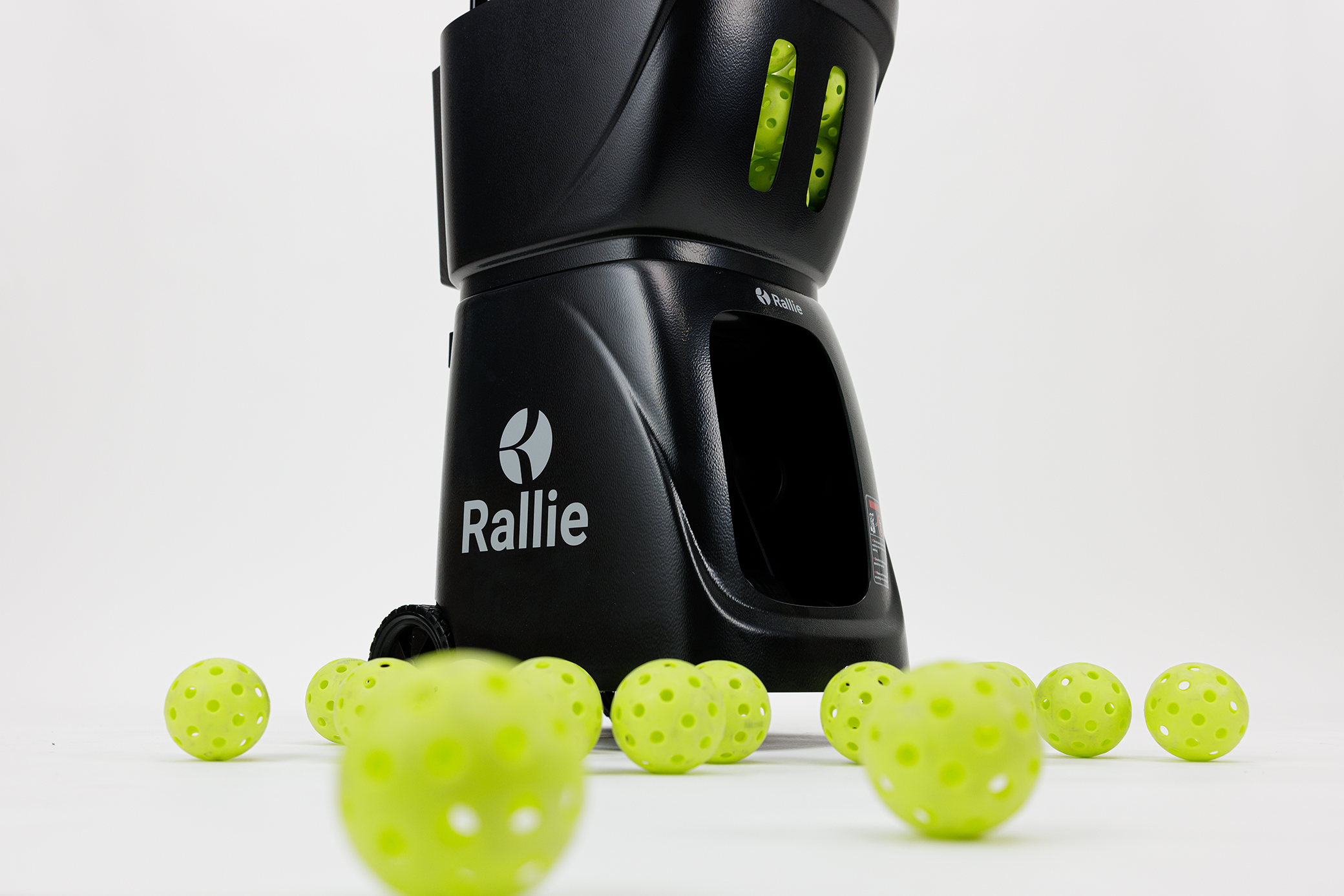
The ball machine market was crowded, but it wasn't crowded with conviction. Many of the machines on the court were built by legacy tennis companies that had drifted into pickleball because the market was growing — not because they understood the game. The pickleball-first companies were doing real work on marketing and customer service, but their machines were big. Heavy. Machines that size really only make sense parked at a facility, and even there, they're not a great option. A coach should be able to toss their machine in the back of the truck. A player should be able to carry it onto the court for a quick session before work.
I believed there was room for something different: a machine you could actually lift. Portable, without compromise. The same ball speeds. True topspin and backspin. A full library of preset drills, plus the ability to build your own. Smaller didn't have to mean less.
That belief became Rallie.

The Machine Was Never the Point
Here's something I've said from day one: a ball machine, by itself, is just a dumb piece of hardware.
The machine matters. But what makes it matter is the technology behind it — the intelligence that turns repetition into improvement. When I wrote the original business plan, the real vision was already on the page: an AI coaching platform, connected to the machine, powered by vision engineering. A system that doesn't just feed you balls, but actually understands your game.
It was too early. Building that platform meant raising serious capital, and I was a newcomer who didn't know anyone in the industry. So I made a decision that shaped everything since: earn the right to build it. Bring a great machine to market first. Build a brand. Prove we could sell. Then take the bigger swing.
Checking the Boxes
Six months after launch, the proof was there:
-
Rallie had become a name people knew.
-
We had built a real brand, not just a product.
-
We were known and respected in pro circles.
-
We had made deep connections across the industry.
-
Eight PPA players had signed on to sponsor and endorse Rallie.
We invested heavily in those athlete relationships — not as a marketing line item, but because building alongside the best players in the world keeps you honest about what the game actually demands.
And the market noticed. Competitors arrived in waves — crowdfunding campaigns, flashy machines, bold claims. We watched it all closely, and it only sharpened our conviction: in this space, durable companies aren't built on promises. They're built on products that do what they say, season after season. That's the standard we hold ourselves to.
The Next Chapter
Now, sixteen months into the marketplace, we're taking the step this company was always pointed toward.
Rallie is moving into software. To be clear: the Rallie ball machine isn't going anywhere. We'll keep building it, selling it, and improving it. But now we're adding the layer it was always meant to have. We're building something I believe will change not just the ball machine market, but the entire pickleball coaching space, for players who want to improve faster, for coaches who want to do more with their time, and for facilities that want to offer something no one else can.
In the coming months, we'll launch RallieAI, which will be a new web-based and mobile app, and in our next post, I'll start pulling back the curtain on what we've built.
The machine opened the door. This is the story of everything we're building on the other side of it.
We're glad you're here for it.
Eric Fransen Founder & CEO, Rallie
Share: